The Gérald Genta pair – Patek Philippe 3700/1 and Audemars Piguet 5402ST
Collecting · · by Christian Bissener

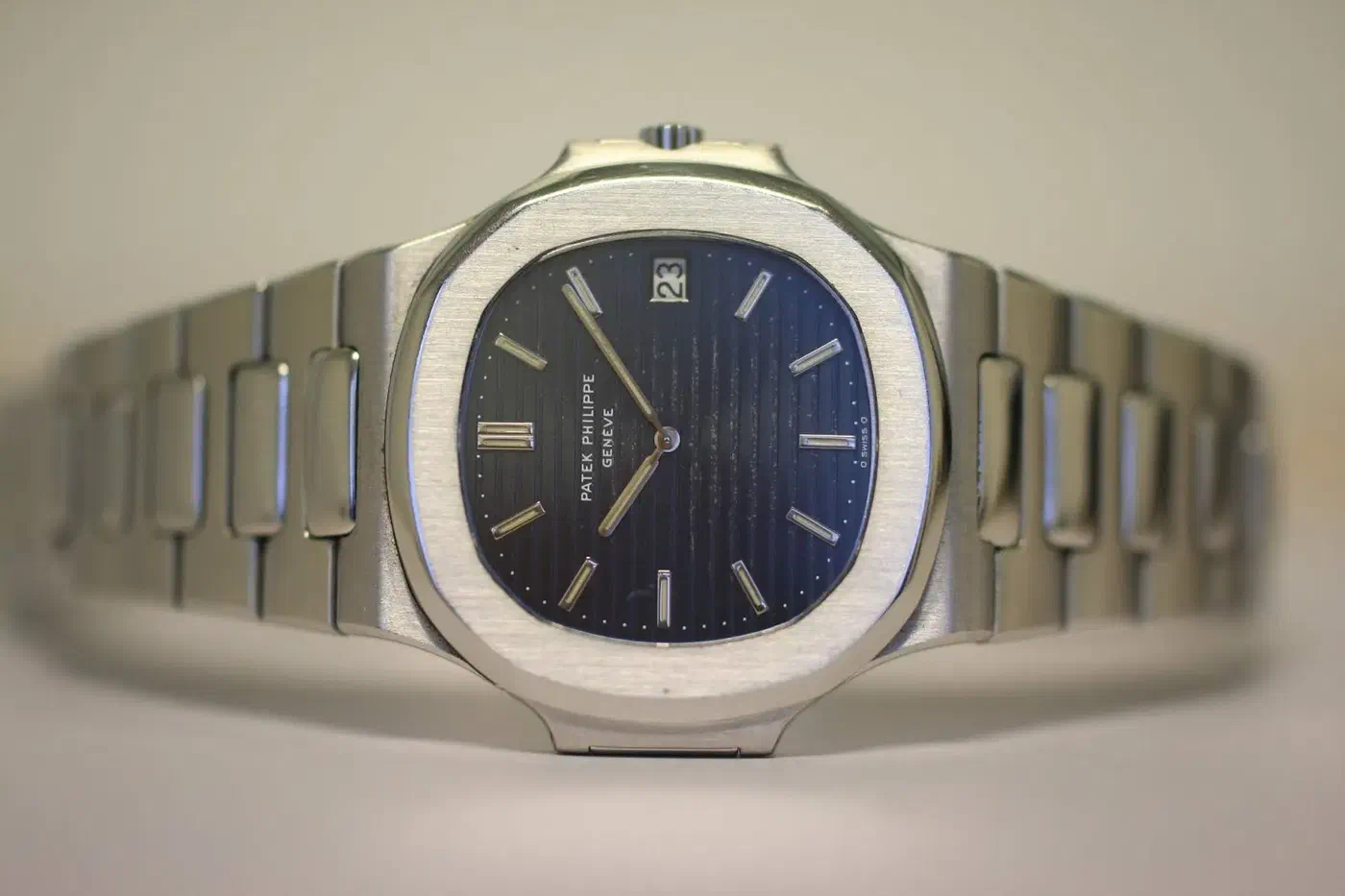
The Patek Philippe 3700/1 and the Audemars Piguet 5402ST A-series are on the list of watches every serious collector should own. Both were designed by Gérald Genta, the 5402 in 1972 and the 3700/1 in 1976, and both have an octagonal case, a shape still present in the modern versions. For us, the epitome is always the beginning: the first 5402 and 3700/1.
The dial of the Royal Oak
One of the most interesting parts of both watches is the dial, developed at Cadran Stern by Roland Tille, then the master developer of the house. Genta approached Tille in 1972 for a dial design for the Audemars Piguet 5402ST. Tille used the newly developed “tapisserie” method to create thirteen different designs, and Audemars chose the one that is still in the DNA of the Royal Oak today. The A-series has a tapisserie finish, a black galvanic dial and a protective layer of lacquer.

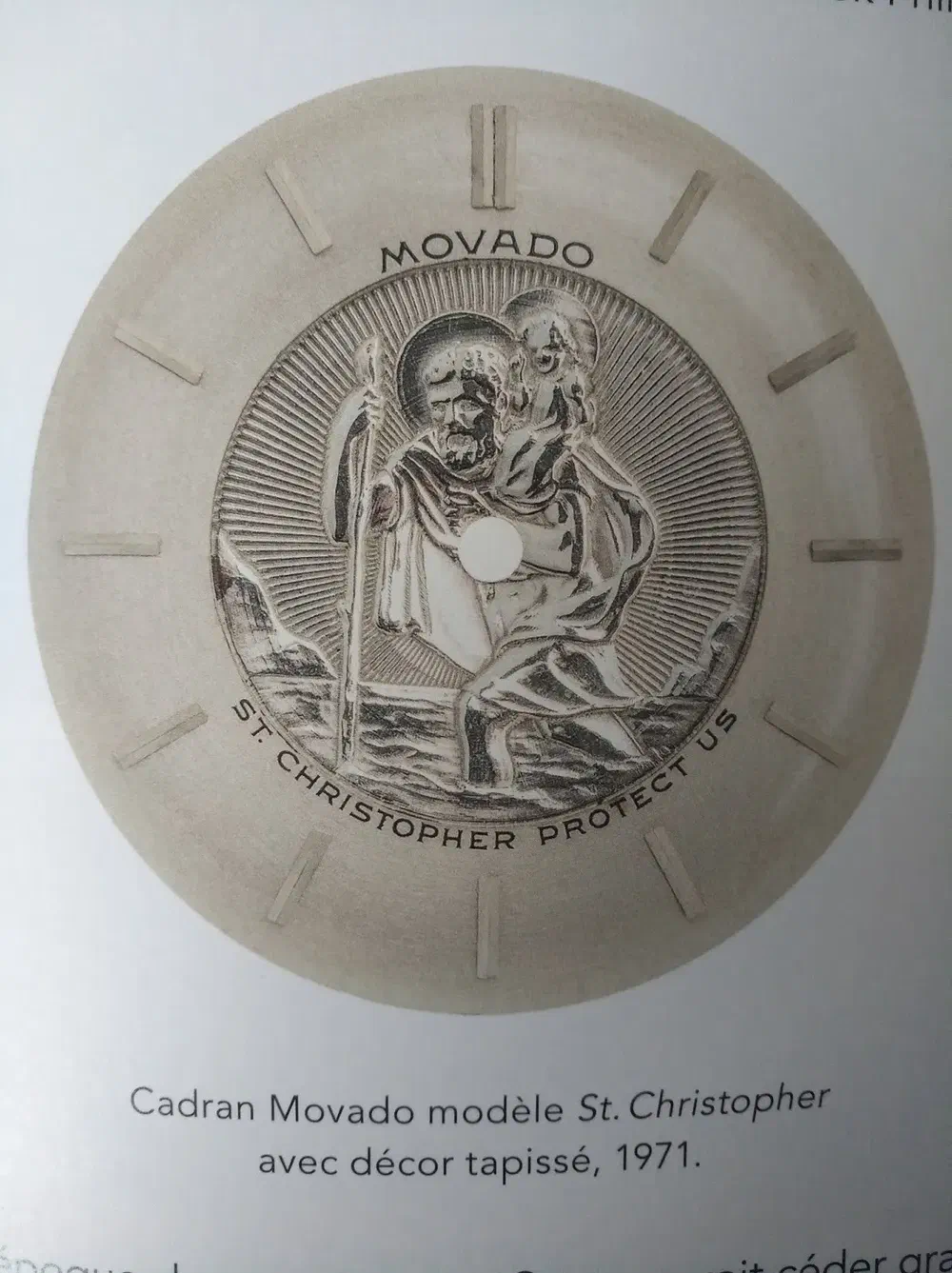
The idea of using tapisserie came from a dial Tille created in 1971 for Movado, the St. Christopher model. As Tille himself said, the Movado dial led to the development of the tapisserie technique and so, ultimately, to the dial of the 5402ST and the 3700/1.
The dial of the Nautilus
When Patek Philippe asked Genta in 1976 to design the Nautilus, he remembered Tille’s work for the Royal Oak and approached him again. Tille presented ten different designs, and Henry Stern chose the one that has lasted to this day. The first fifty examples used the same method as the 5402ST, tapisserie, but it proved too difficult to obtain a perfect result. Production changed to a different technique, “rabotage”, which is not made with the tapisserie machine but with a manually operated cutter, each line of the dial being cut individually. The Patek Philippe 3700/1 has a rabotage finish, a blue galvanic dial and a black lacquer.
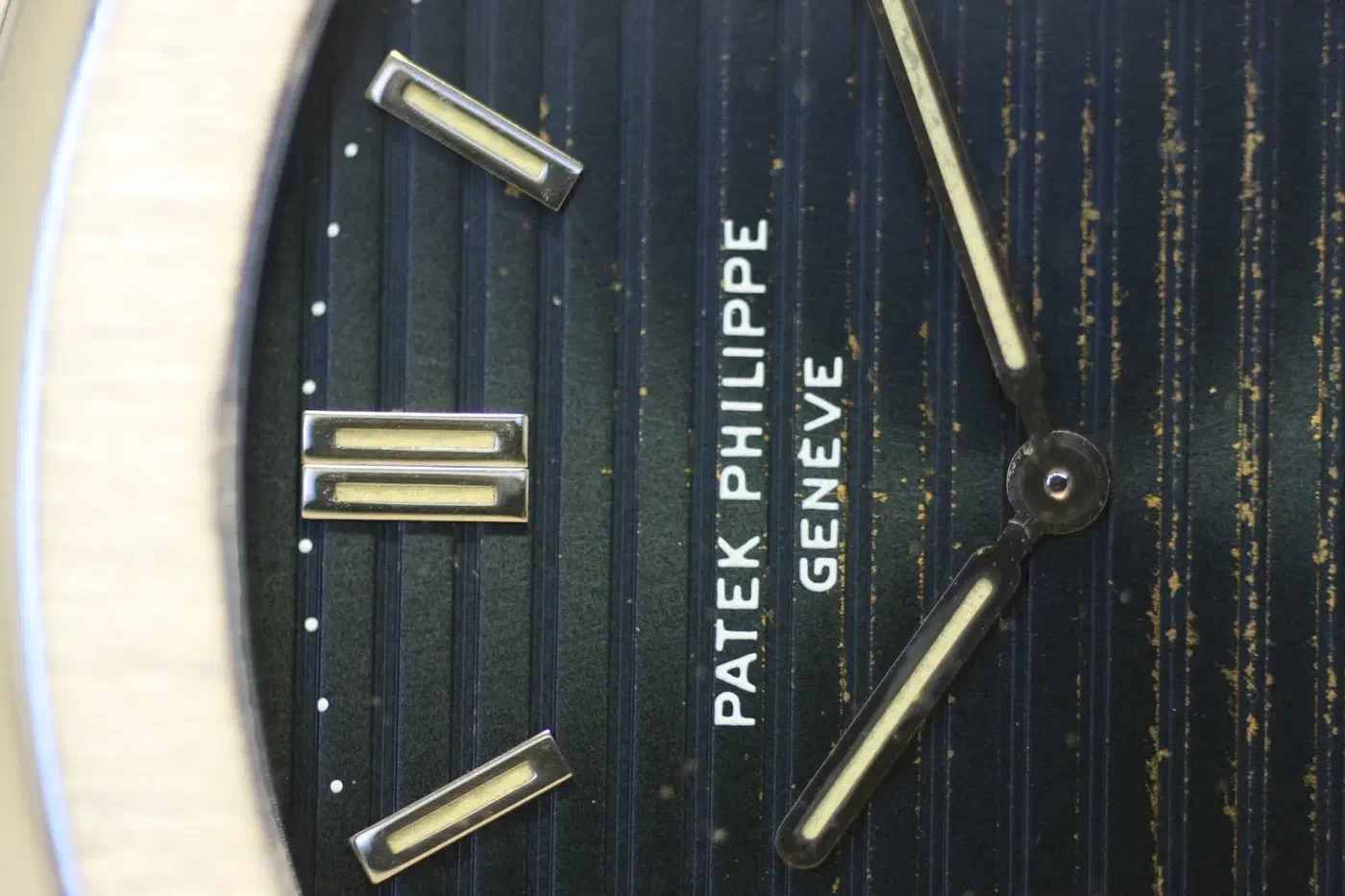
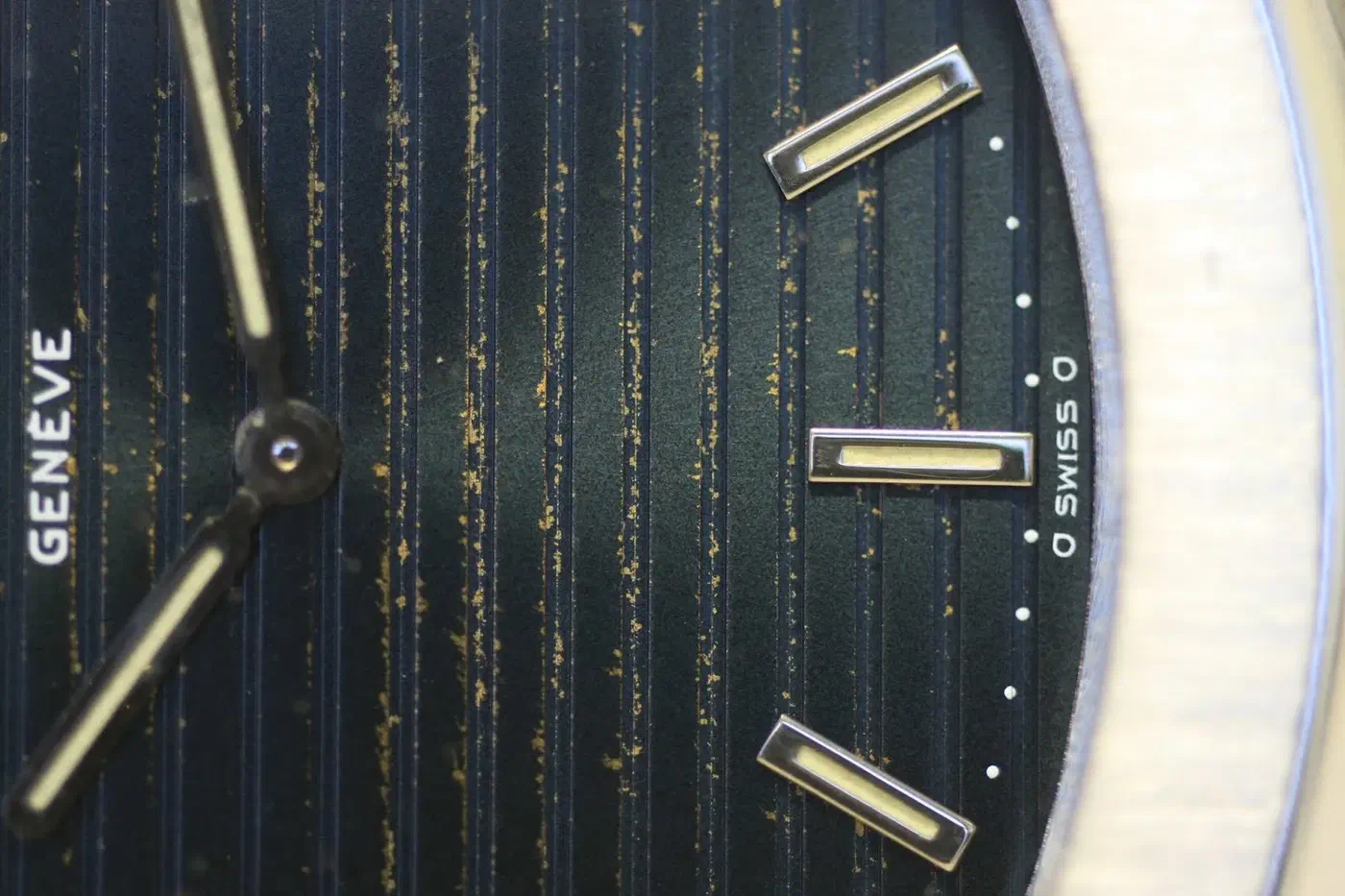
For us the real Nautilus and the real Royal Oak will always be the first ones, the 3700/1 and the 5402ST A-series. An octagonal case, hours, minutes and date – nothing less, nothing more. It all started with these two models.
For more on the dial maker Cadran Stern, we recommend the book “Le Cadran” by Dr. Helmut Crott, available from vintagewatchexpert.com.